4:3 stretch to 16:9 based on WSS (1 Viewer)

Vasilich

Portal Pro
August 30, 2009
3,392
1,173
Germany, Mayence
Home Country
Russian Federation Russian Federation
Perhaps that information can be encoded as part of the video stream. I don't know.
yes, MPEG2 has aspect_ratio_information field in Sequence header describing display aspect ratio, and AFAIK this field used by most content providers. This is 4 bit field where only 4 values are defined/allowed: 1:1, 4:3, 16:9, 2.21:1. (Source: section 6.3.3 of MPEG-2 Standard)
 
Last edited:

mm1352000

Retired Team Member
  • Premium Supporter
  • September 1, 2008
    21,544
    8,236
    Home Country
    New Zealand New Zealand
    yes, MPEG2 has filed describing display aspect ratio, and AFAIK this field used by most content providers.
    Well, yes - MPEG 1 and 2 have that, and presumably h.264 and HEVC have an equivalent. Please refer to my earlier post:
    https://forum.team-mediaportal.com/threads/4-3-stretch-to-16-9-based-on-wss.128535/#post-1112058

    When I look at the WSS standard I think it has different information that can't be encoded in the MPEG sequence header:
    http://en.wikipedia.org/wiki/Widescreen_signaling#Group_1_.28Aspect_Ratio.29
     

    Owlsroost

    Retired Team Member
  • Premium Supporter
  • October 28, 2008
    5,539
    5,038
    Cambridge
    Home Country
    United Kingdom United Kingdom
    Perhaps that information can be encoded as part of the video stream. I don't know.
    yes, MPEG2 has aspect_ratio_information field in Sequence header describing display aspect ratio, and AFAIK this field used by most content providers. This is 4 bit field where only 4 values are defined/allowed: 1:1, 4:3, 16:9, 2.21:1. (Source: section 6.3.3 of MPEG-2 Standard)

    MP has long supported the Display Aspect Ratio (DAR) info encoded in the MPEG1/MPEG2//H.264 video stream - it's parsed out by TsReader and passed to the MP player code (and EVR Presenter (dshowhelper) also gets the information via the video decode filter and EVR mixer). The DAR info is also one of the inputs to ViewModeSwitcher and IFC which can be factored into their decision making process.

    I assume that @marttoma is concerned about 'pillar boxed' 4:3 content in a 16:9 video stream (i.e. DAR = 16:9) - is that correct ?
     

    mm1352000

    Retired Team Member
  • Premium Supporter
  • September 1, 2008
    21,544
    8,236
    Home Country
    New Zealand New Zealand
    MP has long supported the Display Aspect Ratio (DAR) info encoded in the MPEG1/MPEG2//H.264 video stream - it's parsed out by TsReader and passed to the MP player code (and EVR Presenter (dshowhelper) also gets the information via the video decode filter and EVR mixer). The DAR info is also one of the inputs to ViewModeSwitcher and IFC which can be factored into their decision making process.
    Thanks for jumping in. :)

    I assume that @marttoma is concerned about 'pillar boxed' 4:3 content in a 16:9 video stream (i.e. DAR = 16:9) - is that correct ?
    Mmm, the way I read the first post it was 16:9 content squashed/stretched into a 4:3 frame (ie. the content fills the 4:3 frame to make the most of the resolution; no black bars). To correct the aspect ratio for display, the picture would need to be stretched horizontally (and maybe squashed vertically). In the past I had access to a few channels that broadcast like that. This is the same situation that I had thought WSS was used to handle with analog broadcasts, where the frame size is fixed 4:3 but broadcasters wanted to broadcast 16:9 content.
     

    Owlsroost

    Retired Team Member
  • Premium Supporter
  • October 28, 2008
    5,539
    5,038
    Cambridge
    Home Country
    United Kingdom United Kingdom
    Mmm, the way I read the first post it was 16:9 content squashed/stretched into a 4:3 frame (ie. the content fills the 4:3 frame to make the most of the resolution; no black bars). To correct the aspect ratio for display, the picture would need to be stretched horizontally (and maybe squashed vertically). In the past I had access to a few channels that broadcast like that.

    That is anamorphic 16:9, and is the normal situation for widescreen SD video (raw video is e.g. 720 x 576, the DAR is 16:9, so it gets linearly stretched to fill a 16:9 display). Some (low quality) channels in the UK transmit 384 x 576 video with a 16:9 DAR, and yes it looks as rough as you might think it would.....big macro-blocks anyone ?
     

    mm1352000

    Retired Team Member
  • Premium Supporter
  • September 1, 2008
    21,544
    8,236
    Home Country
    New Zealand New Zealand
    So if I was seeing 16:9 content squashed into a 4:3 frame, it would indicate that the DAR was not set to 16:9?
     

    marttoma

    MP Donator
  • Premium Supporter
  • March 24, 2014
    282
    88
    Praha
    Home Country
    Czech Republic Czech Republic
    I assume that @marttoma is concerned about 'pillar boxed' 4:3 content in a 16:9 video stream (i.e. DAR = 16:9) - is that correct ?
    Yes, I think.

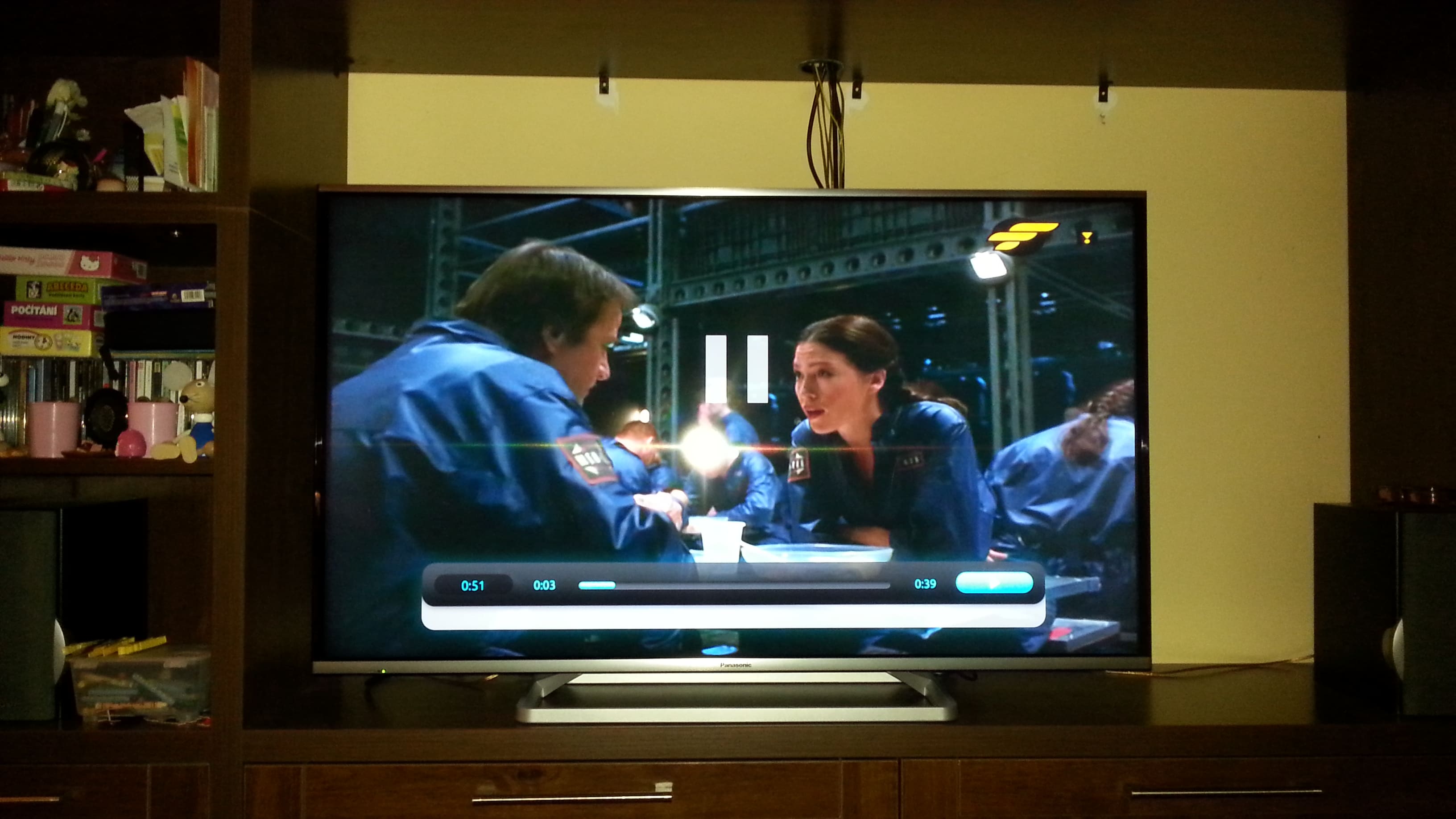
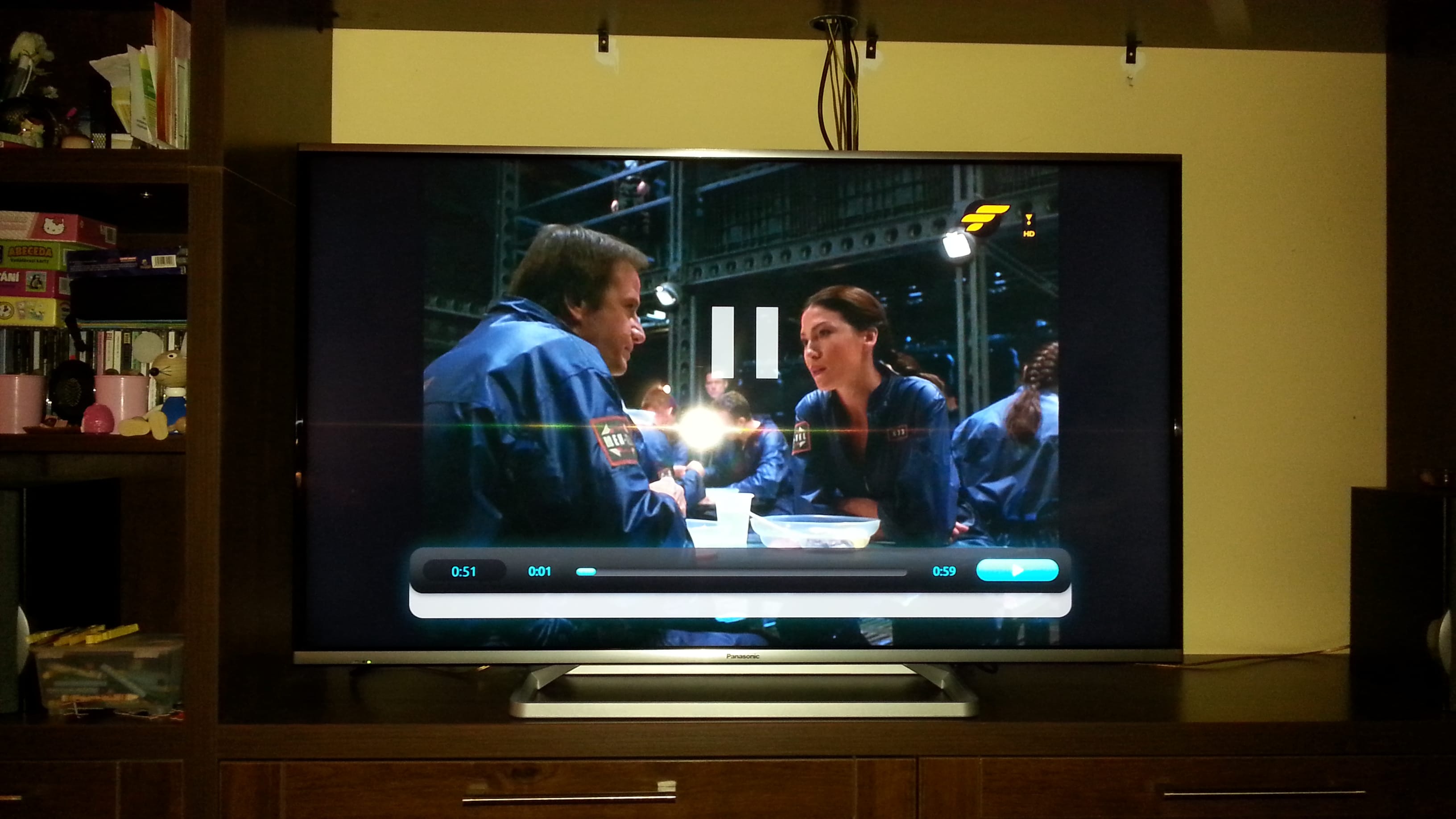
    My TV is setup to Full HD resolution (1920x1080). My video card in HTPC has also 1920x1080. I am receiving plenty of channels from cable provider, e.g. "Fanda" channel. In this case I am receiving 2 "Fanda" channels:
    • Fanda (SD) -> PAL resolution
    • Fanda (HD) -> HD resolution

    Both "Fanda"channels transmitting same TV content. There are two cases how the content looks like on the TV screen:
    1. In some cases both channells are displaying same TV content into the full screen (IFC is switch off).
    2. In some cases both channells are not displaying same content into the full screen (IFC is switch off):
      • Fanda SD shows the content into the full screen (see attached picture 1)
      • Fanda HD does not show the content into the full screen (see attached picture 2), there are pillar on both sided of the picture

    This option 2 happens on HD channels only (but not all time), depends on the TV content with 4:3 aspect ratio I think. I would like to solve this option 2 -> I have IFC now, but as I mentioned already in firts post, the IFC takes time to stretch picture to the full screen and sometimes it does just left side first, and after some time it stretch also right side, depends on the IFC settings. I believe this stretching of pillar boxed 4:3 could MP do automatically without IFC as TV set op box does (it is so fast that I cannot see this stretching time).
     

    Attachments

    • Pic1.jpg
      Pic1.jpg
      1.4 MB
    • Pic2.jpg
      Pic2.jpg
      1.3 MB

    mm1352000

    Retired Team Member
  • Premium Supporter
  • September 1, 2008
    21,544
    8,236
    Home Country
    New Zealand New Zealand
    Fanda HD does not show the content into the full screen (see attached picture 2), there are pillar on both sided of the picture
    This picture seems to be correct. The content is 4:3. When shown on a 16:9 screen there will be "pillar boxes" (black bars) on the side to avoid distortion (stretching) the content.

    Fanda SD shows the content into the full screen (see attached picture 1)
    This picture seems to be incorrect. The picture is stretched/distorted. In NZ we call that "fatovision" because the stretching makes people look fatter than they actually are.

    I would like to solve this option 2...
    So to be clear: you prefer to have full screen with stretched/distorted content?
    (I prefer the opposite. I'd rather have undistorted content.)

    I believe this stretching of pillar boxed 4:3 could MP do automatically without IFC as TV set op box does (it is so fast that I cannot see this stretching time).
    Yes, MP probably could do that... but it would distort the content (!!!).
     

    marttoma

    MP Donator
  • Premium Supporter
  • March 24, 2014
    282
    88
    Praha
    Home Country
    Czech Republic Czech Republic
    I forgot to mention in my last post that I have "Stretch" mode in TV Zoom setting - it means I would like to stretch the 4:3 picture to 16:9.

    From my last post MP does the "Stretch" for 4:3 picture to 16:9 screen for Fanda SD channel, but why MP does not do this "Stretch" for Fanda HD channel? As MP does not stretch the picture for HD, I am using the IFC, but I think this could do MP automatically (and much more fast).

    So to be clear: you prefer to have full screen with stretched/distorted content?
    (I prefer the opposite. I'd rather have undistorted content.)
    Yes, I prefer to have full screen with stretched/distorted content (liner or non-liner stretch):)
     

    Owlsroost

    Retired Team Member
  • Premium Supporter
  • October 28, 2008
    5,539
    5,038
    Cambridge
    Home Country
    United Kingdom United Kingdom
    I forgot to mention in my last post that I have "Stretch" mode in TV Zoom setting - it means I would like to stretch the 4:3 picture to 16:9.

    From my last post MP does the "Stretch" for 4:3 picture to 16:9 screen for Fanda SD channel, but why MP does not do this "Stretch" for Fanda HD channel? As MP does not stretch the picture for HD, I am using the IFC, but I think this could do MP automatically (and much more fast).

    It doesn't do it for HD because HD is always widescreen (4:3 is not allowed, as far as I know), so the DAR is almost certainly 16:9. This means that MP doesn't know it's 4:3 content 'pillar boxed' into 16:9. For SD 4:3 is allowed, so MP can apply the non-linear stretch zoom mode (if enabled in the TV settings).

    Post the client logs for the same '4:3' content on SD and HD - that would tell us what is actually going on....
     

    Users who are viewing this thread

    Top Bottom